Key Takeaways
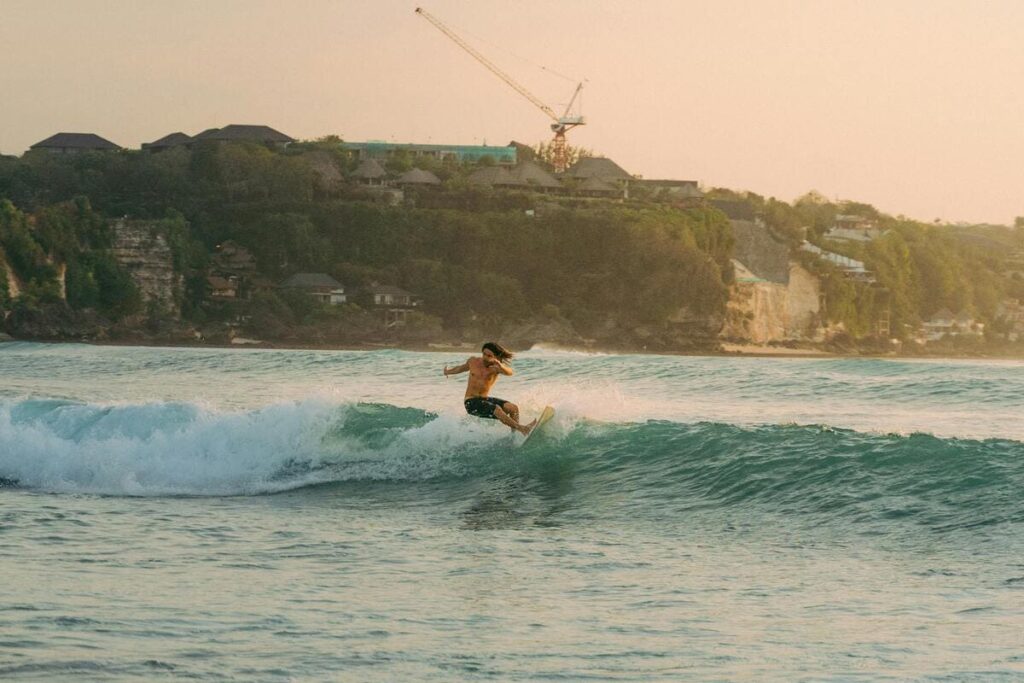
- Strategic Location: The Bukit Peninsula (Pecatu/Uluwatu) offers the highest quality beginner waves away from the Kuta crowds.
- Structured Progression: Success comes from a mix of land-based drills, ocean safety briefings, and water coaching.
- Seasonal Awareness: While surfable year-round, different months offer unique benefits for beginners.
- Investment in Quality: Private coaching (1:1) is the fastest and safest way to build technical fundamentals.
- Safety First: Understanding etiquette and falling techniques prevents 90% of beginner accidents.

Phase 1: Why Bali is the World’s Best Surf Classroom
Many people ask: “Why travel all the way to Bali to learn to surf when I could go elsewhere?” The answer lies in the **consistency of the energy**. Unlike European or North American coastlines, which rely on localized wind swells, Bali captures long-period groundswells from the deep Southern Ocean. These waves are “organized”—they arrive in predictable sets with long intervals between them, giving a beginner plenty of time to reset and prepare for the next attempt.
Furthermore, the water temperature in Bali averages a balmy 28°C (82°F) year-round. This is not just a luxury; it is a learning advantage. In cold water, your muscles tense up, and your reaction time slows down. In Bali, you can spend two hours in the water in just a rash vest, allowing for maximum flexibility and stamina. However, this beauty comes with its own challenges, primarily the intensity of the tropical sun. To stay safe in this environment, always follow our essential safety and hydration tips.
Phase 2: Choosing Your Spot (Bukit vs. The Rest)
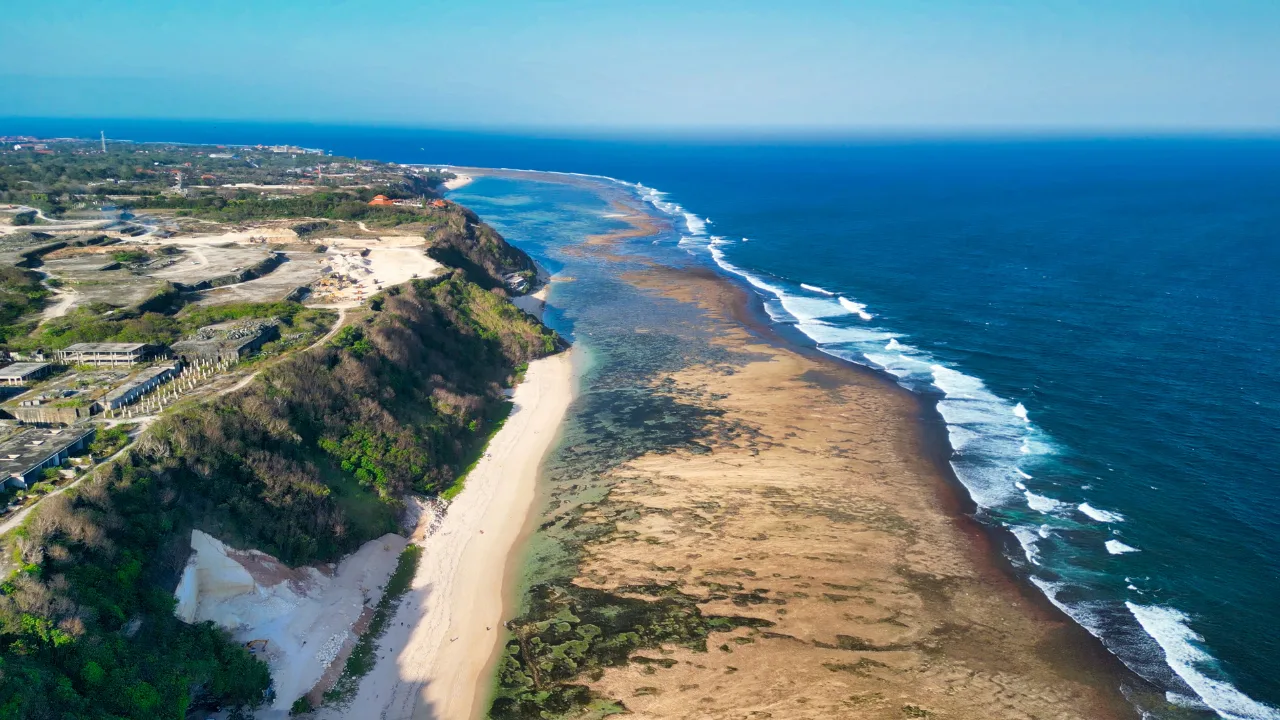
While Kuta is the traditional “hub” for surf schools, serious beginners are increasingly heading south to the Bukit Peninsula (Uluwatu and Pecatu). The reason is simple: **Water quality and crowd management**. The Bukit offers cleaner, more scenic environments and waves that are technically “superior” for learning the mechanics of a real reef-assisted wave.
The three essential spots for beginners in this region are:
- Balangan Beach: A stunning long beach with gentle “reforming” waves that give beginners plenty of time to stand. Explore the Balangan guide.
- Dreamland Beach: A flexible sand-bottomed break, perfect for those who want a softer landing and easy beach access. Explore the Dreamland guide.
- Baby Padang: The protected inside zone of the world-famous Padang Padang, offering a safe sanctuary when the swell gets too big elsewhere. Explore the Padang Padang guide.
For a side-by-side comparison of these locations to help you pick the best one for today’s conditions, read our complete beginner spot comparison.

Phase 3: Timing is Everything (Seasons and Tides)
Surfing is a dance with the lunar cycle and global weather patterns. In Bali, you cannot just show up at the beach at any time and expect perfect waves. Beginners need to understand two critical clocks: the **seasonal clock** and the **tidal clock**.
The Seasonal Clock
While the dry season (May-September) offers the most consistent offshore winds, it also brings the largest swells. The wet season (October-April) often sees smaller, more manageable waves for beginners, though the wind can be more unpredictable. For a deep dive into which month is best for your skill level, see our seasonal surf guide for beginners.
The Tidal Clock
Beginner-friendly reef spots near Uluwatu are highly sensitive to the tide. Surfing at a very low tide can be shallow and intimidating, while a very high tide can sometimes make the waves too fat to catch. Most professional lessons are scheduled during the **mid-tide** window to ensure the perfect balance of depth and wave shape.
Phase 4: Your First Session (What to Expect)
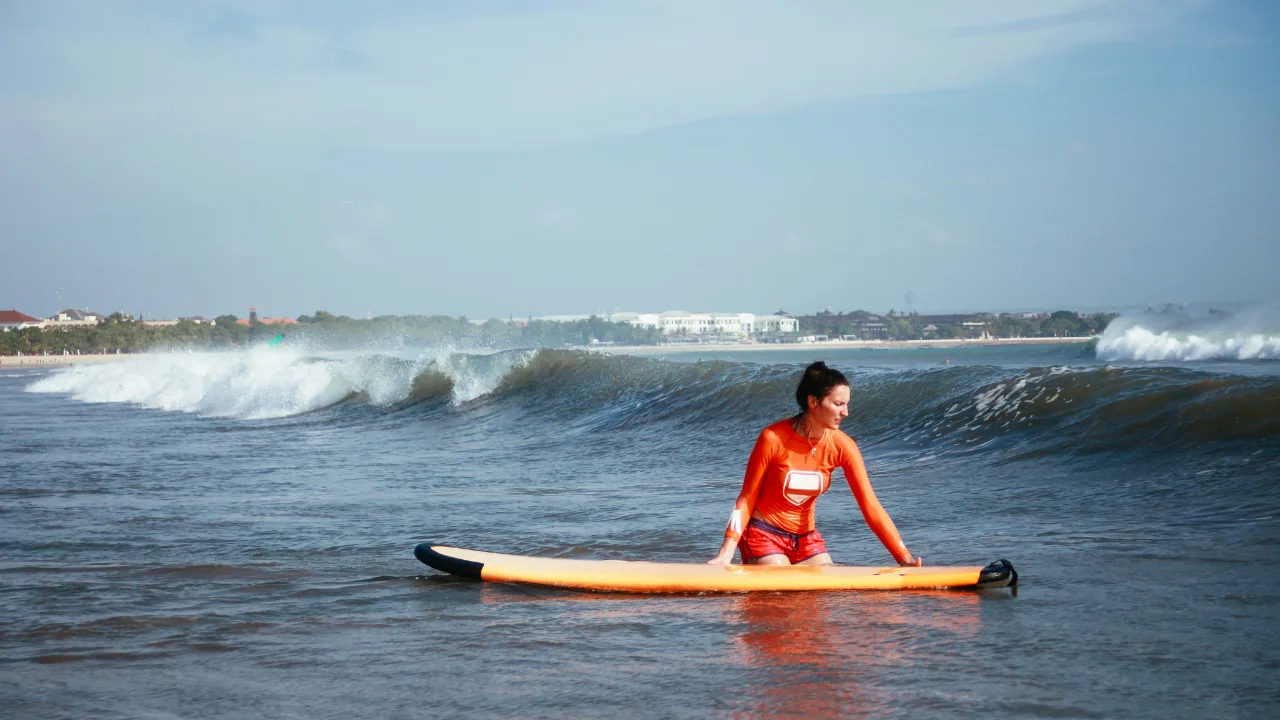
A professional 2-hour beginner lesson is a carefully choreographed experience. It is designed to take you from a place of zero knowledge to a state of oceanic confidence. The process is divided into four distinct stages: Briefing, Drills, Coached Riding, and Feedback.
The core focus of your first session is the **”pop-up”**—the technical movement of moving from your stomach to your feet. We drill this on the sand first because once you are in the water, you have only 2 or 3 seconds to execute the move. To prepare mentally for the structure of your first day, we highly recommend reading our step-by-step first lesson guide.
Phase 5: Investing in Your Skills (Pricing and Formats)
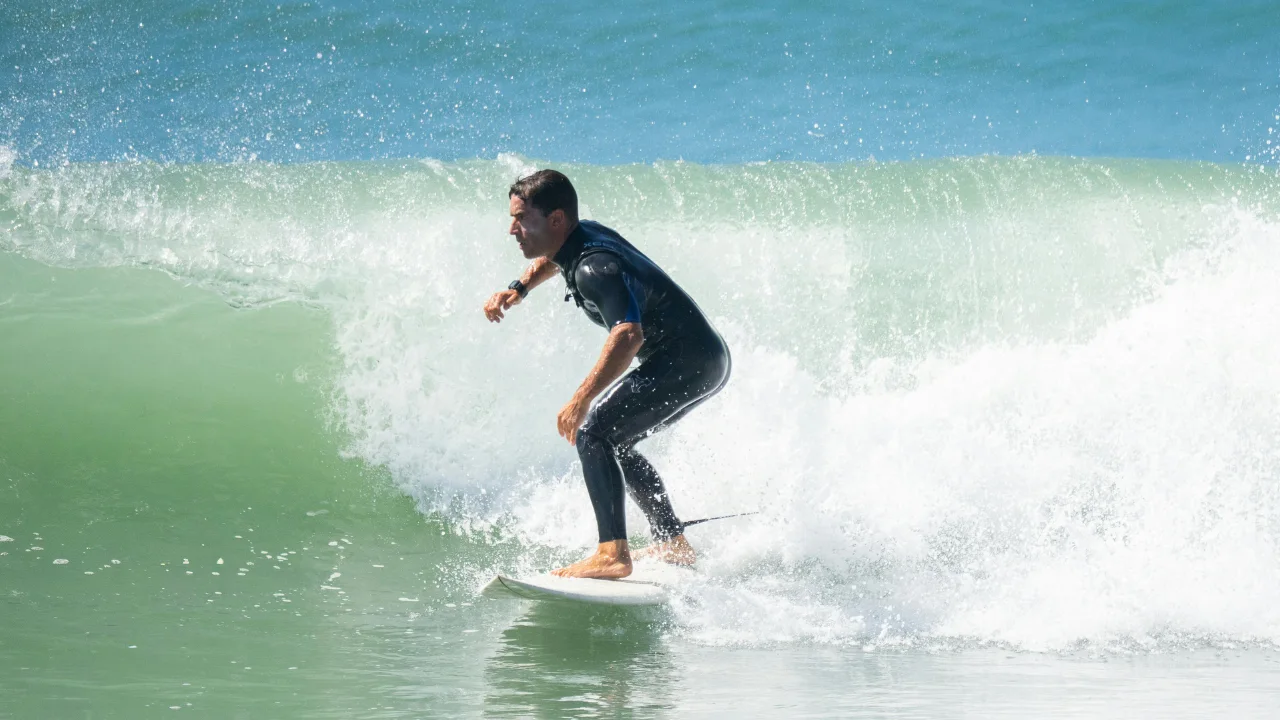
One of the most common questions from beginners is: “Should I join a group or pay for a private coach?” In Bali, the price difference is relatively small, but the technical outcome is massive. A private lesson (1:1 ratio) allows the instructor to catch 100% of your technical errors, whereas a group coach must divide their attention between 4 or 5 people.
Typical 2026 reference prices in the Uluwatu area:
| Format | Ratio | Price (IDR) | Progression Speed |
|---|---|---|---|
| Private | 1:1 | 600,000 | Fastest (Highly Recommended) |
| Semi-Private | 2:1 | 500,000 | Great for couples/friends |
| Group | 3+:1 | 400,000 | Social but slower |
For a full breakdown of why we recommend certain formats over others, read our Private vs. Group lesson analysis. For a complete list of current 2026 rates and packages, visit our pricing guide.

Phase 6: The “Rules of the Road” (Safety and Etiquette)
Surfing has a strict set of unwritten rules that keep the lineup safe and harmonious. As a beginner, your goal is to be a respectful participant in the community. The most important rule to learn is **Priority**: the person closest to the breaking peak has the right of way. “Dropping in” (taking a wave that someone else is already on) is the primary cause of conflict and accidents in the water.
Other essential safety habits include learning how to fall “flat” to avoid the reef, protecting your head with your arms as you surface, and never “ditching” your board when a wave is coming. For a complete safety system you can memorize before you hit the water, read our comprehensive beginner safety and etiquette guide.
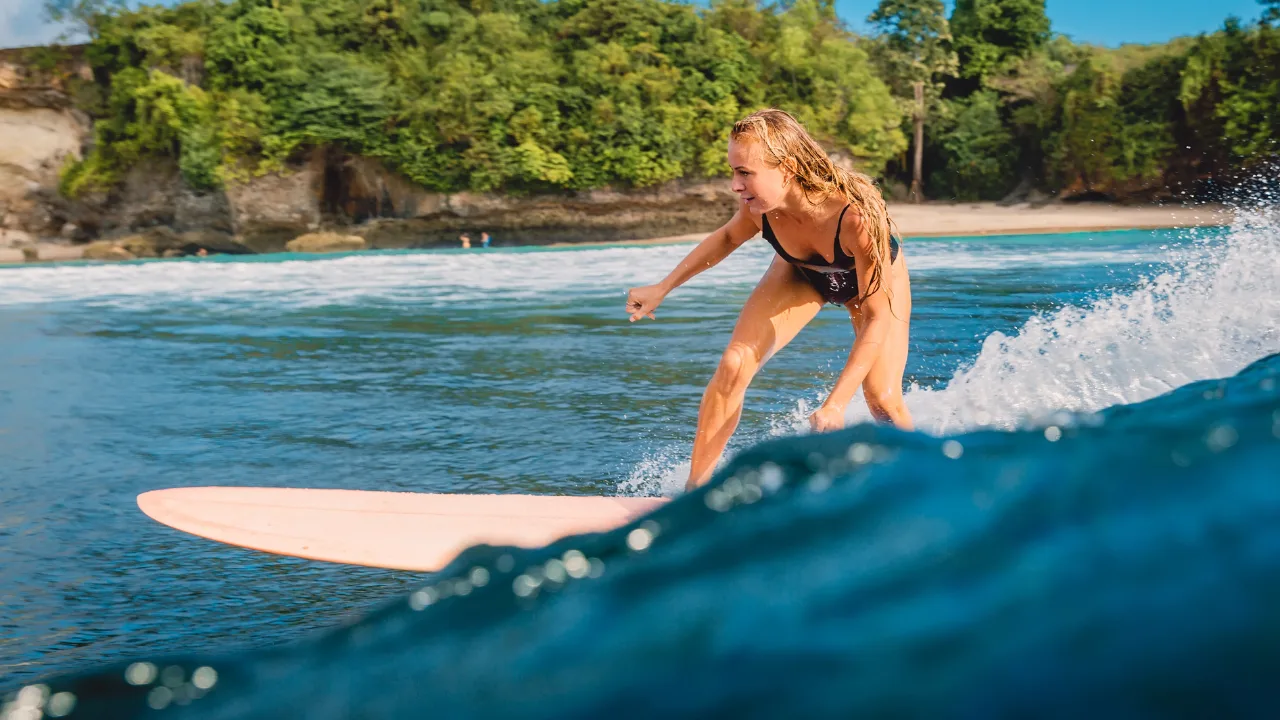
Phase 7: Your 3-Day Progression Roadmap
One lesson is a memory; three lessons is a skill. If you are serious about learning, we recommend a 3-day structured approach. This allows your brain to consolidate the technical mechanics overnight and builds the “paddling fitness” required for longer rides.
- Day 1: The Basics. Focus on prone positioning, pop-up mechanics, and riding the whitewater straight to the shore.
- Day 2: Refinement. Improving your balance, learning to “look” where you want to go, and attempting your first gentle turns.
- Day 3: Independence. Catching small “green” (unbroken) waves and learning how to angle the board to ride along the wave face.

Begin Your Surfing Journey with Bali Surf Pro
Are you ready to transform your Bali holiday into a life-changing skill? Our team of lifeguard-certified, professional instructors is dedicated to providing the highest quality beginner surfing experience in the Uluwatu and Pecatu areas. We handle all the logistics—the gear, the tides, and the safety—so you can focus 100% on the joy of catching your first wave.
WhatsApp for Instant Booking & Schedule Checks: Chat with us on WhatsApp
View Our Full Range of 2026 Lesson Packages: Surf Packages & Pricing