Key Takeaways
- Beach Choice is Safety: Always match the beach and conditions to your current skill level.
- Technique of Falling: Learning how to fall safely (the “starfish”) is as important as learning how to stand.
- The Priority Rule: Understanding who has the right of way prevents 90% of water-based collisions.
- Board Management: Your surfboard is your primary flotation device but also your biggest safety risk to others.
- Current Knowledge: Learning to identify and react to rip currents is a vital ocean literacy skill.

1. Location-Based Safety: Choosing the Right Battlefield
The first and most critical safety decision you will make happens before you even touch the water. Many beginners hear the name “Uluwatu” and assume the whole area is for learning, which is a dangerous misconception. Expert reef breaks like Uluwatu Main Peak or Bingin can be treacherous for novices. Safe beginner surfing in the Bukit Peninsula is confined to specific “pockets.”
Our recommended safety zones for beginners near Pecatu include:
- Balangan Beach: Offers long, soft whitewater zones on a mid-to-high tide. Read the Balangan safety guide.
- Dreamland Beach: A sandy bottom break that is much more forgiving if you hit the floor. Read the Dreamland safety guide.
- “Baby Padang”: The protected inside zone of Padang Padang, shielded from the main reef swell. Read the Padang Padang safety guide.
If you are still unsure which of these matches your specific level, we recommend checking our ultimate comparison of Bali’s beginner surf spots.

2. The Art of the Fall: Protecting Yourself and Your Board
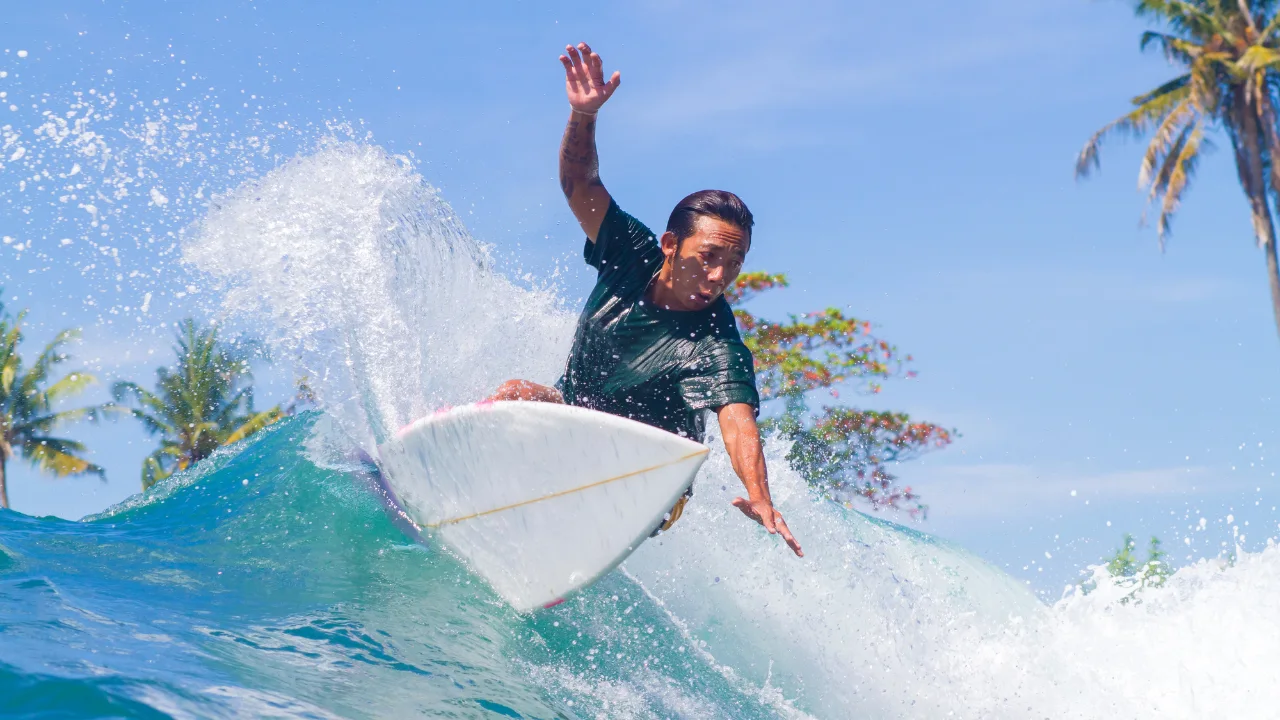
Falling is an integral part of surfing. Even the best surfers in the world fall on 50% of their rides. As a beginner, you will fall frequently. The goal is to make these falls “controlled” rather than “chaotic.”
- The Starfish Technique: Never dive head-first into the water. You should aim to fall “flat” on the surface, spreading your weight like a starfish. This ensures that even if the water is shallow, you won’t impact the bottom with force.
- Cover Your Head: As soon as you hit the water, bring your arms up to wrap around your head. This protects you from being hit by your own board or another surfer’s board as you surface.
- Surface Slowly: Do not rush to the surface. Wait for the energy of the wave to pass over you, then surface facing the ocean so you can see if another wave or surfer is approaching.
- Stay with the Board: Unless the situation is life-threatening, never abandon your surfboard. It is your primary flotation device and your “flag” in the water so others can see you.
3. Navigating Currents: Respecting the Power of Water
Rip currents (or “rips”) are the most common source of fear for beginners. A rip is simply a channel of water flowing back out to sea. In Bali, these are common and can be powerful, but they are not “monsters” if you understand how they work.
The beginner’s guide to currents:
- Don’t Fight the Rip: If you feel yourself being pulled out, never try to paddle directly back to shore against the current. You will exhaust yourself. Instead, paddle **parallel to the shore** until you are out of the rip.
- The “Express Lane”: Experienced surfers actually use rips as an “express lane” to get back to the waves without having to paddle through breaking whitewater. If you are with an instructor, they will guide you on how to use these movements safely.
- Panic is the Enemy: If you feel overwhelmed, sit on your board, take deep breaths, and signal for help by waving one arm. Do not try to swim away from your board.
- Stay in the “Impact Zone”: Most beginners are safest in the area where the waves are actively breaking. The water here is “pushing” you back toward the shore. If the water is unusually calm and deep between breaking waves, it might be a rip.
4. Surf Etiquette: The Golden Rules of the Lineup
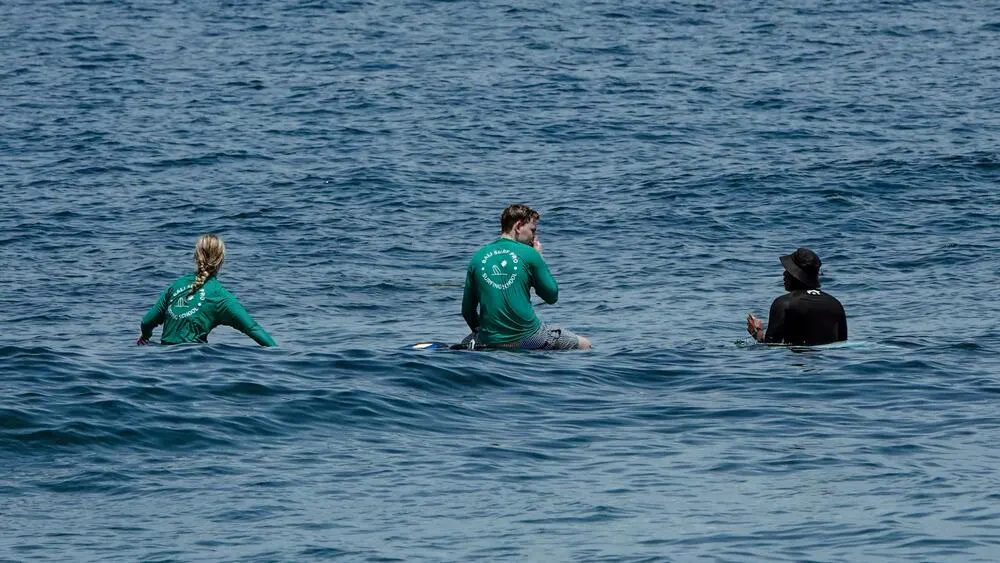
Surf etiquette is not just about being polite; it is a critical safety system that prevents board-on-board and board-on-body collisions. In crowded Bali lineups, these rules are strictly enforced by the local community.
The Top 5 Rules for Beginners
- Don’t “Drop In”: The person closest to the breaking peak has the right of way. If someone is already on the wave, you must not take off in front of them. This is the #1 cause of surfing accidents.
- Don’t “Snake”: Do not paddle around someone to get closer to the peak after they have already been waiting their turn. Patience is respected in the water.
- Paddle Wide: When paddling back out to the lineup, do not go through the “impact zone” where people are surfing. Paddle wide around the break to stay out of their path.
- The “Last Look”: Before you commit to a wave, always look over your shoulder toward the peak to ensure no one else is already riding it.
- Communicate: If you are paddling for a wave and someone is in your way, shout a friendly “Going Left!” or “Going Right!” so they know which way to move.
5. Board Control: Your Lifeline and Your Risk
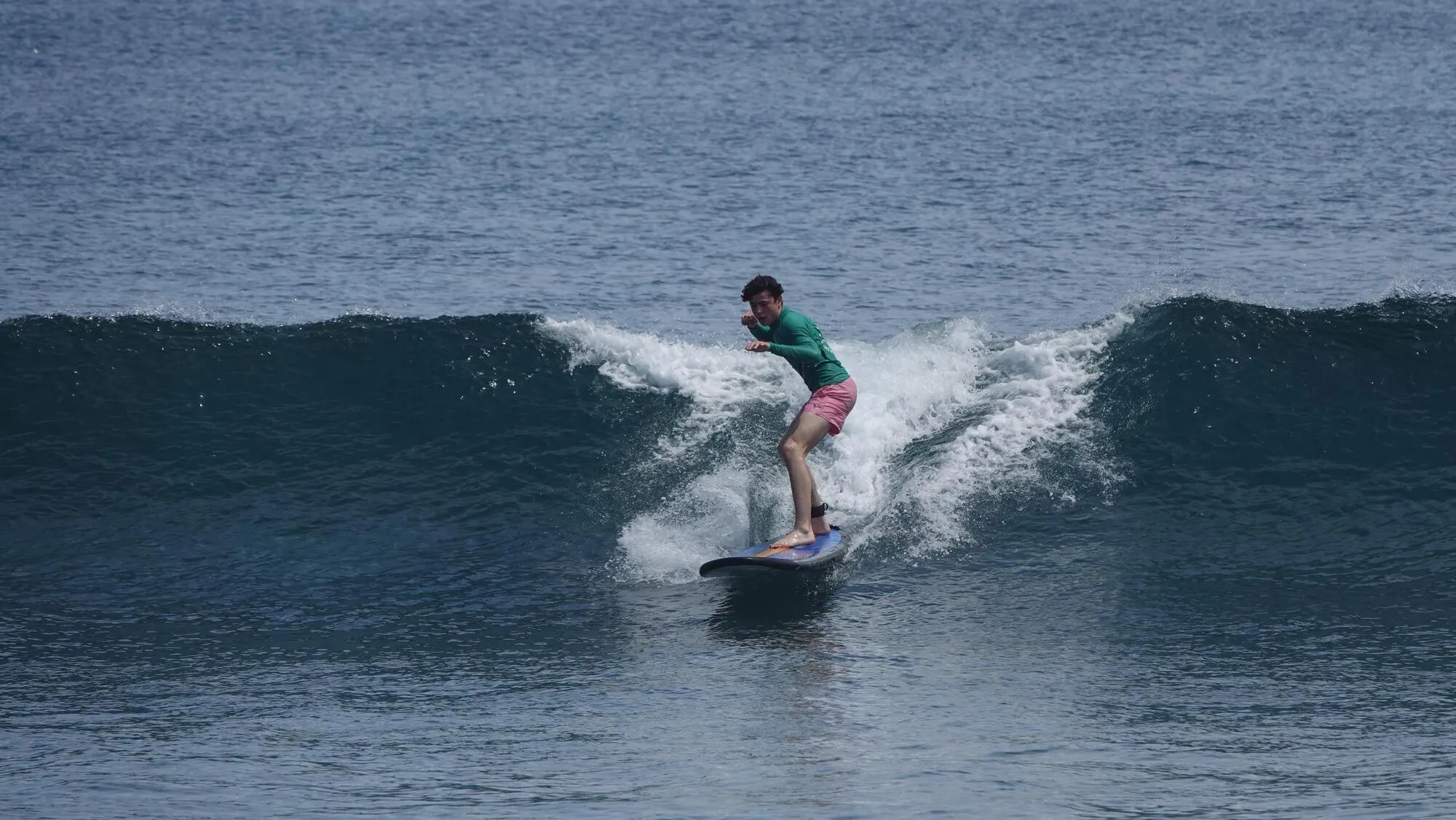
A 9-foot beginner foam board is heavy and carries significant momentum. If you lose control of it, it becomes a projectile that can injure you or others. Board management is the most underrated skill in beginner surfing.
- Hold the Rails: When walking through the whitewater, always keep two hands on the rails (edges) of the board. Hold the board **to your side**, never in front of you. A wave hitting a board held in front of you will push it into your face.
- Check Your Leash: Your leash should be secure but not too tight. Ensure there are no knots in it, as a knot can reduce the strength of the cord by 50%.
- “Turtle Rolling”: If a large wave is about to hit you, don’t just “ditch” the board. Flip the board over so you are underneath it and hold onto the rails tightly. This keeps the board stable and prevents it from hitting others.
- The 10-Foot Rule: Always try to maintain at least 10 feet (the length of your board plus your leash) of distance between you and the next surfer.

6. Environmental Safety: Sun, Salt, and Stamina
In Bali, the environment is often as challenging as the waves. The tropical sun and the physical exertion of paddling in salt water can lead to rapid exhaustion, which is a major safety risk in the ocean.
To stay environmentally safe:
- Zinc is Essential: Standard sunscreen often washes off or runs into your eyes. Use a thick, colored zinc on your face for 2 hours of continuous protection.
- Pre-Hydration: Drink at least 1 liter of water before your lesson. Dehydration leads to muscle cramps, which can be dangerous when you are 50 meters from shore.
- Respect the 2-Hour Limit: Most beginners lose focus and technique after 90-120 minutes. It is better to end a session early while you still have energy than to push into a state of “sloppy” and dangerous surfing. For more on optimizing these sessions, read our guide on what to expect in your first lesson.
- Warming Up: Spend 5 minutes on the sand warming up your shoulders, hips, and core. This significantly reduces the risk of joint strains or muscle tears during the explosive pop-up movement.

The Professional Safety Net: When to Take a Lesson
Surfing is one of the hardest sports to self-teach. A professional coach acts as your “external brain,” providing the situational awareness that takes years to develop. If you are a complete beginner, a structured lesson is the single most important safety decision you can make.
You should book a lesson if:
- It’s your first time: You need an expert to select the board, the beach, and the specific tide window.
- You feel nervous: A private coach stays within arm’s reach and manages the ocean for you.
- The lineup is crowded: An instructor knows the “pockets” of the beach that are less busy and will keep you away from traffic.
- You want to progress faster: Immediate technical feedback prevents bad habits that lead to falls. To find the right format for your needs, compare our private vs. group lesson options.

Book a Safety-First Beginner Surf Lesson
Ready to catch your first waves with the confidence of a pro? Our lifeguard-certified instructors prioritize your safety above all else. We manage the tides, the gear, and the positioning so you can focus entirely on the thrill of the ride. Join us for a structured 2-hour session near the iconic cliffs of Uluwatu.
WhatsApp for Instant Confirmation: Chat with Bali Surf Pro
View all our lessons and 2026 rates: Surf Packages & Pricing