Key Takeaways
- Beginners do best on soft, predictable beach breaks with sandy bottoms.
- “Uluwatu” is a region—some waves are advanced, but nearby beaches can be beginner-friendly.
- Pick spots based on wind, tide, and swell conditions, not only on Instagram popularity.
- A good instructor will move locations if conditions aren’t right for learning.
- Morning sessions typically offer calmer conditions and fewer crowds.

What Makes a Surf Spot Beginner-Friendly?
Before diving into specific beaches, it’s important to understand what actually makes a surf spot suitable for beginners. Not all waves are created equal, and choosing the wrong spot can turn an exciting first surf experience into a frustrating or even dangerous situation.
A beginner surf spot usually has these essential characteristics:
- Softer waves: Whitewater or gentle shoulder waves that don’t break with too much power. These waves are forgiving and give you time to practice your pop-up without being pounded.
- Safer entry and exit: Sandy bottoms or deep water entry points mean less risk of hitting rocks or reef. This is crucial for beginners who will inevitably fall many times.
- Space to practice: Less crowded lineups where you won’t collide with other surfers or feel pressured to perform. Beginners need room to make mistakes.
- Consistent waves: Waves that break in a predictable pattern, making it easier to time your paddle and catch waves consistently.
- Gradual depth: A beach where you can stand up and walk out if needed, rather than deep water that requires strong swimming skills.
If you’re brand new to surfing, your primary goal should be repetition. The more waves you catch, the faster you’ll progress. A beginner-friendly spot allows you to catch 10-20 waves in a session, building muscle memory quickly. Compare this to an advanced spot where you might spend most of your time getting washed around and catching only 2-3 waves.
Understanding these fundamentals will help you evaluate any beach you visit, not just the ones listed in this guide. Conditions change daily, and what works one morning might not work the next afternoon.

1) Balangan Beach (Great for First Lessons)
Balangan Beach is often the first choice for surf schools in the Uluwatu area, and for good reason. Located about 20 minutes from central Pecatu, this picturesque beach offers a unique combination of scenic beauty and beginner-friendly conditions during the right tide and swell.
The beach features a long stretch of golden sand backed by dramatic cliffs, creating an Instagram-worthy backdrop for your first surfing photos. But more importantly, the wave setup here often provides gentle, rolling waves that are perfect for learning the basics.
During smaller swells and mid-tide conditions, Balangan offers a forgiving wave that breaks slowly and gives beginners plenty of time to pop up and find their balance. The whitewater section is particularly good for absolute beginners who are still mastering the basics of standing on a board.
What Makes Balangan Special for Beginners
- Wide beach area: Plenty of space for beach lessons and practicing your pop-up on the sand before entering the water.
- Multiple wave zones: Different sections of the beach work for different skill levels, so your instructor can position you in the safest area.
- Beautiful scenery: The cliff backdrop and clear water make the learning experience more enjoyable and memorable.
- Local warungs: Small restaurants along the cliff offer refreshments and a shady spot to rest between sessions.
Beginner Tips for Balangan
- Focus on straight rides first—don’t rush into turning until you can stand consistently.
- Keep your stance low with bent knees and your eyes looking forward toward the beach.
- Listen carefully to your instructor’s timing cues for when to start paddling.
- Stay in the whitewater zone until you’re comfortable, then gradually move to the unbroken waves.
- Take breaks when needed—the tropical sun and paddling can be exhausting for first-timers.
Keep in mind that Balangan’s conditions can change significantly with different swells and tides. On bigger days, the wave can become more powerful and less suitable for complete beginners. This is why surfing with a knowledgeable instructor who can read the conditions is so valuable.
Full guide: Balangan Beach Surfing for Beginners

2) Dreamland Beach (Flexible, Popular Meeting Point)
Dreamland Beach has become one of the most popular meeting points for surf lessons in the Pecatu area. Its convenient location, good facilities, and flexible wave conditions make it an excellent choice for beginners who want a hassle-free surf experience.
The beach earned its dreamy name from the soft white sand and crystal-clear turquoise water. But beyond the aesthetics, Dreamland offers practical advantages for surf schools and their students. The beach has easy parking access, clean restrooms, and several cafes where you can refuel after your session.
Why Instructors Love Dreamland
Many surf instructors use Dreamland as their default meeting point because of its central location and adaptability. If conditions at Dreamland aren’t ideal for beginners on a particular day, it’s easy to relocate to nearby beaches like Balangan or Padang Padang within a short drive.
- Central location: Easy to reach from most hotels in the Uluwatu, Pecatu, and Jimbaran areas.
- Good facilities: Parking, restrooms, board storage, and food options all available on-site.
- Flexibility: When conditions aren’t right, instructors can quickly move to alternative spots.
- Beach break waves: On good days, Dreamland offers fun, rolling waves suitable for learning.
What to Expect at Dreamland
Dreamland can get crowded, especially during peak tourist season from July to September. The beach attracts not only surfers but also sunbathers, swimmers, and day-trippers. This means you’ll need to be extra aware of your surroundings and follow your instructor’s guidance on where to surf.
The wave here can be punchy at times, breaking with more power than some other beginner spots. On smaller days, the whitewater provides excellent practice conditions. On bigger days, your instructor might suggest moving to a more sheltered location.
Full guide: Dreamland Beach Surf Guide

3) Padang Padang (Beginner-Friendly Area + Important Safety Note)
Padang Padang is world-famous for its perfect barreling left-hand reef wave—the kind of wave you see in professional surf competitions and magazine covers. However, that famous wave is definitely NOT for beginners. What many people don’t realize is that Padang Padang also has a separate beginner-friendly area that can be excellent for learning.
The beginner zone at Padang Padang, sometimes called “Baby Padang,” is located in a different section of the beach away from the main reef break. This area features smaller, gentler waves that break over a sandy bottom, making it much safer for first-timers.
Critical Safety Information
This is extremely important: the main Padang Padang reef wave is dangerous for beginners. It breaks over shallow reef, has strong currents, and attracts skilled surfers who expect everyone in the lineup to know what they’re doing. Attempting to surf this wave as a beginner could result in serious injury.
- Always go with an instructor: They know exactly which area is safe for your skill level.
- Don’t paddle out alone: Even if the main wave looks tempting, stay in the designated beginner area.
- Pay attention to tide: The beginner area works best on certain tides—your instructor will know the best timing.
- Respect the locals: Padang Padang has a strong local surf community. Follow proper etiquette and stay out of their way.
When Baby Padang Works Best
The beginner area at Padang Padang typically works best during smaller swells and specific tide windows. On the right day, it offers playful, fun waves that are perfect for practicing your technique after you’ve mastered the basics at other beaches.
This spot is often recommended for students who have already completed one or two lessons and want to continue building their skills in a slightly more dynamic environment. Complete first-timers are usually better served at Balangan or Dreamland.
Full guide: Padang Padang Surf for Beginners
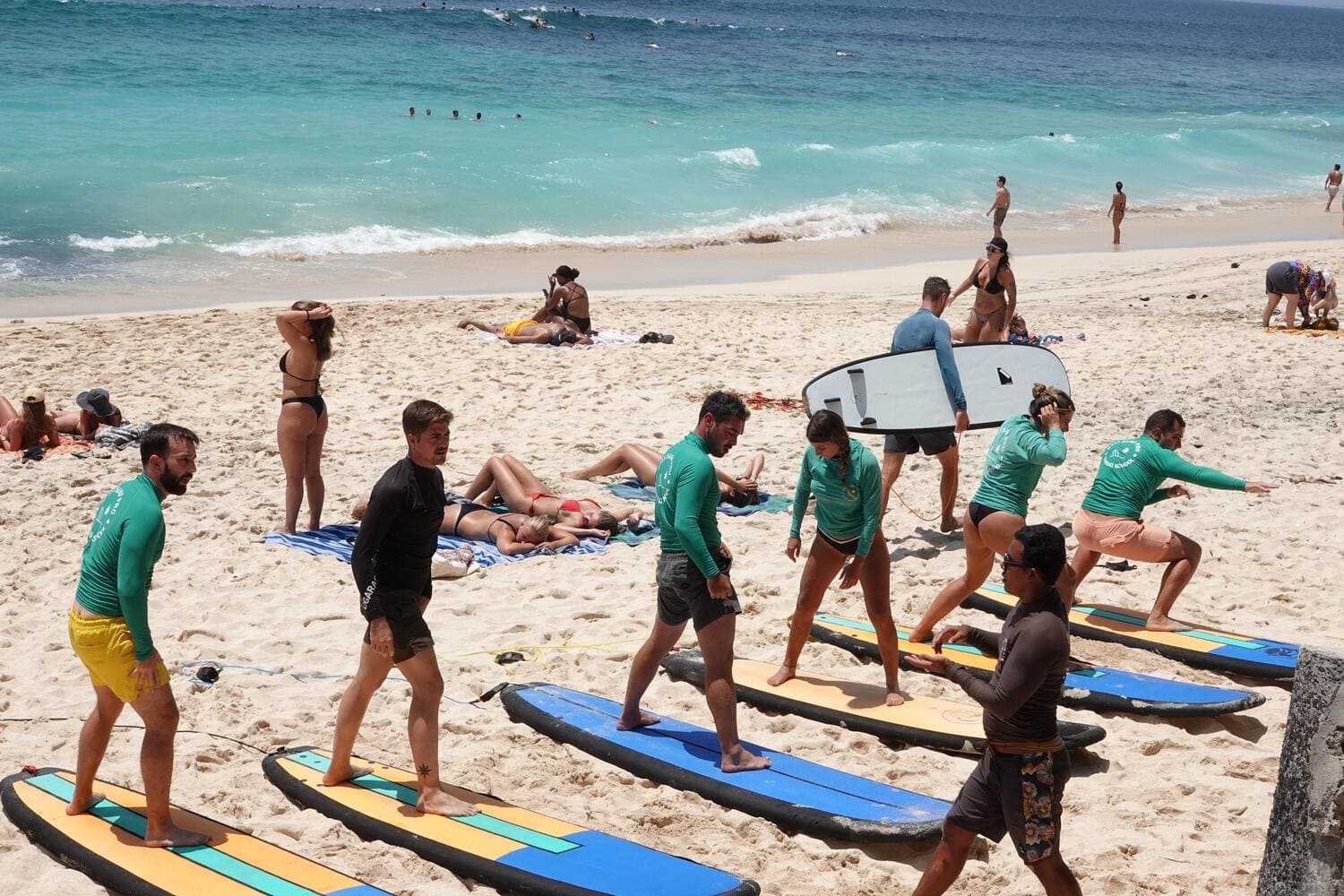
Quick Comparison Table (Beginner View)
Here’s a side-by-side comparison of the three beginner-friendly spots near Uluwatu to help you understand their differences:
| Spot | Best For | Why Beginners Like It | Watch Out For |
|---|---|---|---|
| Balangan | First lessons, complete beginners | Often gentler waves, scenic setting, good beach space | Conditions change with swell and wind |
| Dreamland | Convenient meetups, flexible conditions | Easy access, good facilities, central location | Can get crowded at peak times |
| Padang Padang (beginner area) | Second or third lessons, building skills | Playful practice waves when conditions align | Must avoid the advanced reef wave |
Remember that this table represents general characteristics. Actual conditions vary daily based on swell size, wind direction, and tide. A professional instructor will assess conditions and choose the best spot for your session.
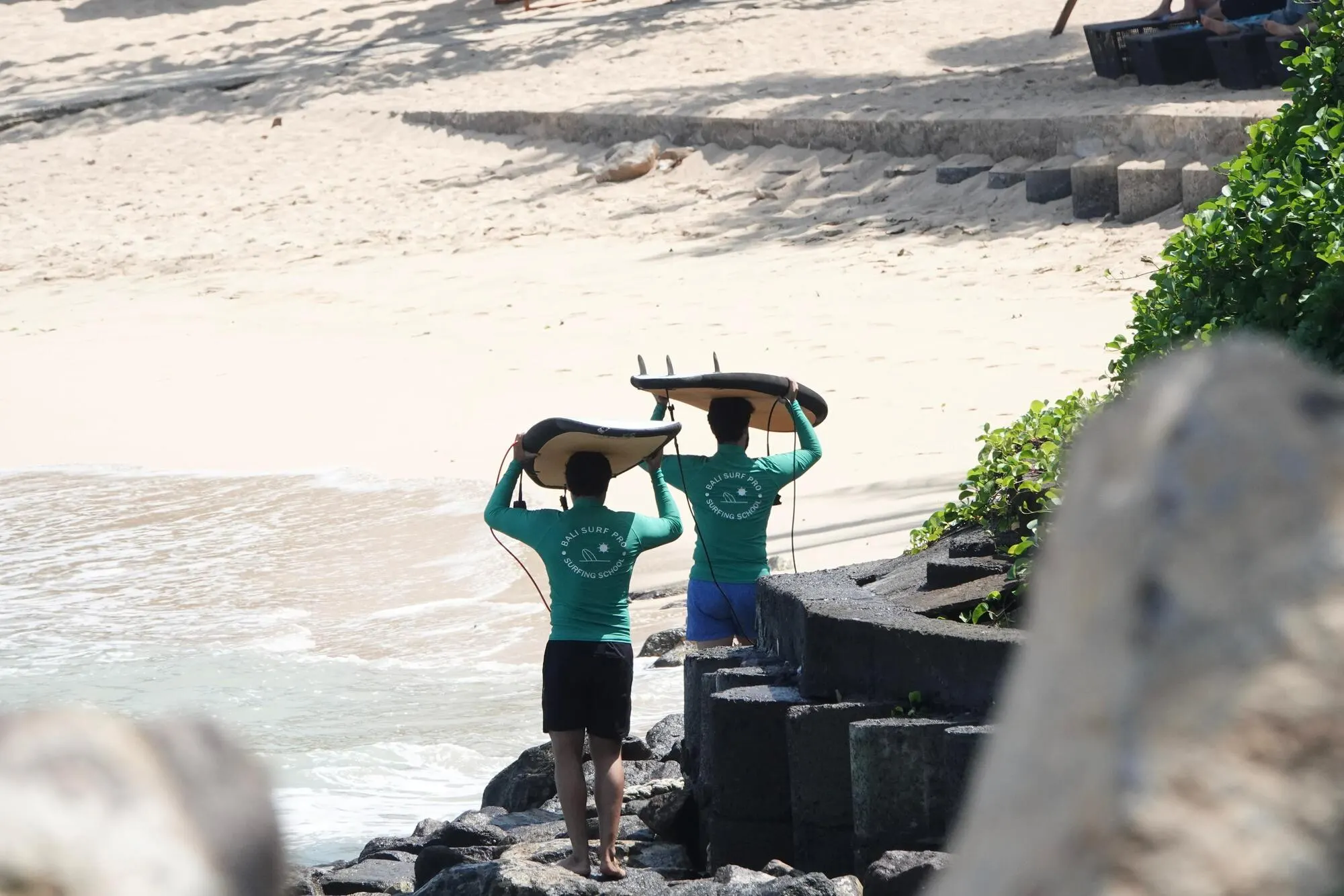
How to Choose the Right Spot Today (3 Essential Checks)
Even if you’ve read everything about Bali’s beginner surf spots, conditions change constantly. Use these three checks to evaluate whether a beach is suitable for your session today:
Check 1: Wave Size
As a beginner, smaller is almost always better. You want waves you can control, not waves that control you. Look for waves that are waist-high or smaller—anything bigger will likely be too powerful for a first-timer to handle comfortably.
Don’t be fooled by what looks “small” from the beach. Waves often appear smaller from shore than they actually are. If experienced surfers are getting worked (tumbled by the waves), it’s probably too big for beginners.
Check 2: Wind Conditions
Wind dramatically affects wave quality. Strong onshore wind (blowing from the ocean toward the beach) creates choppy, messy conditions that are harder to surf. Light wind or offshore wind (blowing from land toward the ocean) creates cleaner, more organized waves.
In Bali, mornings typically offer lighter winds. By early afternoon, trade winds often pick up and make conditions less ideal for learning. This is one reason why early morning lessons are so popular.
Check 3: Tide Level
Tide affects where waves break and how safe certain areas are. Some beaches work better at low tide, others at high tide, and many have a “sweet spot” during mid-tide. Your instructor should be checking tide charts and explaining where you’ll paddle based on the current tide.
For beginners, mid-tide often provides the best conditions—enough water to be safe, but not so much that the waves lose their shape.
Want a complete beginner-friendly season overview? Best Time to Surf Bali for Beginners
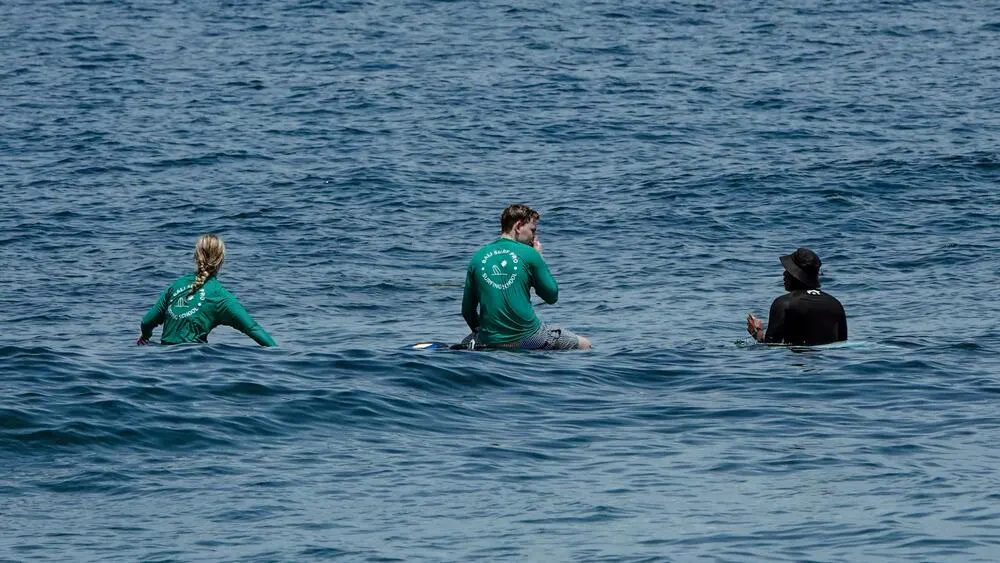
Where Beginners Should NOT Start (Common Mistake)
Many visitors hear “Uluwatu” and assume it’s a beginner-friendly place because it’s such a famous surf destination. This is a dangerous misconception that could lead to serious problems.
The iconic Uluwatu reef breaks—including Uluwatu Main Peak, Temples, Racetrack, and the Outside Corner—are expert-level waves that require years of experience. These waves break over sharp coral reef, have strong currents, and attract highly skilled surfers from around the world.
Waves to Avoid as a Beginner
- Uluwatu (all sections): Powerful reef break with challenging paddle-out through a cave. For experienced surfers only.
- Padang Padang main reef: World-class barreling wave over shallow reef. Extremely dangerous for beginners.
- Impossibles: Long, fast left-hander over reef. Strong currents and crowds of skilled surfers.
- Bingin: Shallow reef break with a technical takeoff. Not suitable for learning.
If you’re a beginner, start at the beaches specifically designed for learning—Balangan, Dreamland, or the beginner zone at Padang Padang. Build your skills progressively, and you’ll eventually be ready to tackle more challenging waves safely.
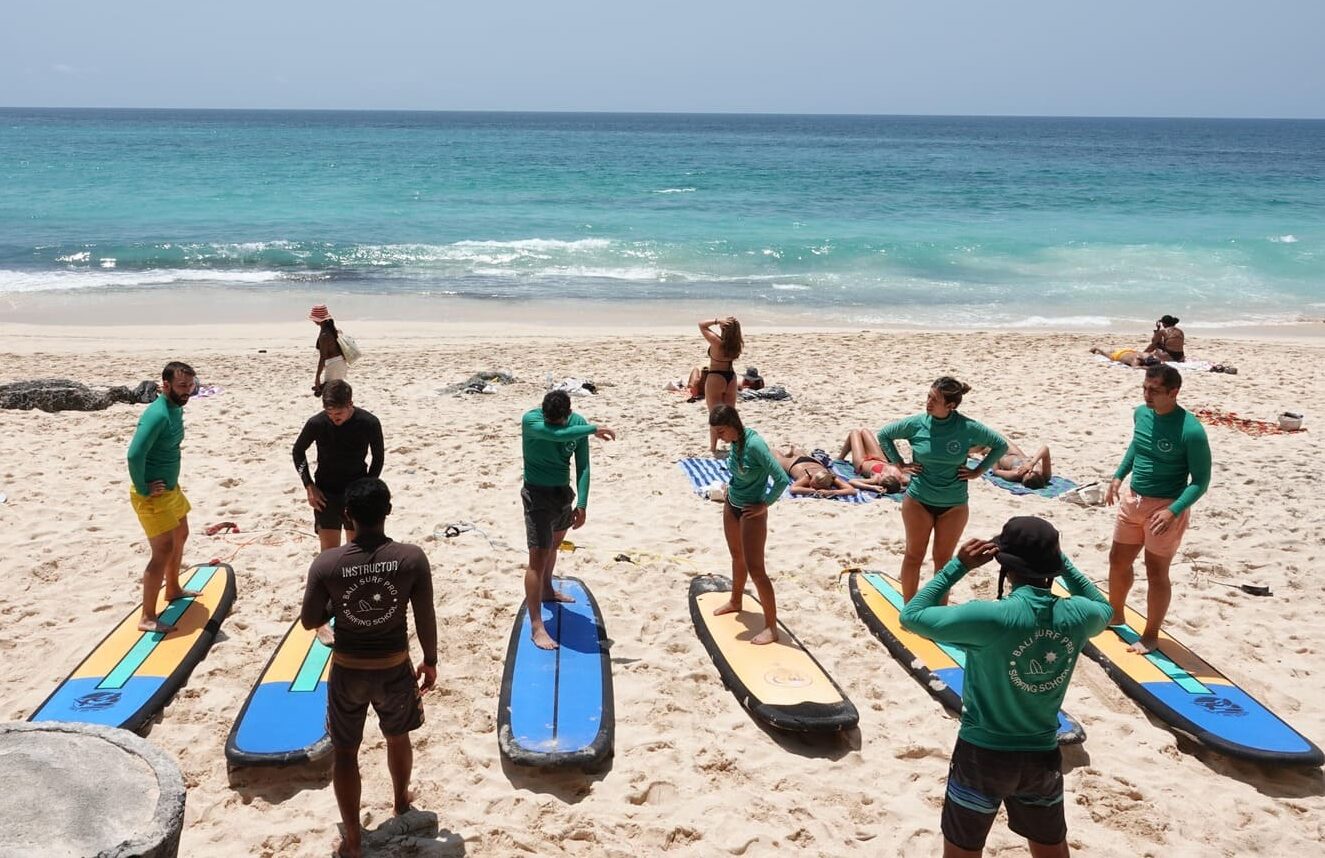
How to Learn Faster at Any Beginner Spot
Choosing the right beach is only part of the equation. How you approach your learning process makes a huge difference in how quickly you progress. Here are proven strategies to accelerate your surfing development:
- Take professional lessons: Wave timing is incredibly hard to self-teach. An instructor positions you correctly, tells you when to paddle, and gives real-time feedback that’s impossible to get on your own.
- Request video feedback: Many instructors offer video or photo sessions. Watching yourself surf reveals technique issues you can’t feel while riding.
- Book consecutive sessions: Doing 2-3 lessons within a few days helps you progress faster than spacing lessons weeks apart. Your body remembers the movements while they’re still fresh.
- Practice pop-ups on land: Spend time on the beach practicing your pop-up motion. The more automatic this movement becomes, the better you’ll perform in the water.
- Stay physically prepared: Swimming, yoga, and general fitness all contribute to better surf performance. Paddling is exhausting if you’re not in reasonable shape.
Curious what actually happens in a first surf lesson? First Surf Lesson Bali: What to Expect

A Simple Decision Guide (Pick the Best Spot Today)
If you’re a complete beginner evaluating beaches on your own, use this straightforward decision logic to stay safe and maximize your learning:
- If waves look powerful, fast, or heavy: Avoid that spot and look for a beach with softer, slower-breaking waves. Size can be deceiving—when in doubt, choose somewhere calmer.
- If the water looks messy and windy: Aim for an earlier session (before the wind picks up) or switch to a more sheltered beach. Choppy conditions make learning much harder.
- If the lineup is crowded with experienced surfers: Choose a spot with more space, or book a private lesson so your instructor can position you away from traffic.
- If you’re unsure about anything: Ask a local or your instructor. Making assumptions about ocean conditions can lead to dangerous situations.
In the Uluwatu area, it’s completely normal and expected to meet at one beach and then move if conditions aren’t beginner-friendly. Good instructors do this automatically—they check multiple spots before committing to a location.

What to Ask Before Booking (Beginner Checklist)
Not all surf lessons are created equal. Before booking with any instructor or surf school, ask these important questions to ensure you’re getting a quality, safe experience:
- Where will we surf today? Good instructors check conditions and choose the best spot, rather than defaulting to one beach regardless of conditions.
- Will you switch beaches if conditions aren’t suitable? Flexibility is a sign of a professional instructor who prioritizes your learning over convenience.
- Is this lesson suitable for complete beginners? Some “beginner” lessons actually target people with previous experience. Make sure the lesson matches your actual skill level.
- What’s included in the price? Confirm whether the fee covers board rental, rash vest, sunscreen, water, and any transportation.
- How long is the session? Understand how much time is spent on land instruction versus in the water. Quality lessons include both.
- What’s the student-to-instructor ratio? Smaller groups or private lessons typically result in faster progress and more personal attention.
Pricing reference: Surf Lesson Prices Bali 2026

Beginner-Friendly Timing Tips
When you surf matters almost as much as where you surf. Strategic timing can dramatically improve your learning experience and help you catch more waves.
Most beginners learn faster when they follow these timing principles:
- Surf in the morning: Early sessions (6-9 AM) typically offer lighter winds, cleaner waves, and fewer crowds. The ocean is often glassier before the afternoon trade winds kick in.
- Choose smaller swell days: Check the surf forecast and aim for days with smaller swells. You’ll catch more waves and build confidence faster when you’re not fighting against powerful sets.
- Book consecutive days: Muscle memory builds quickly when you practice regularly. Three sessions over three days will improve your skills more than three sessions spread over three weeks.
- Avoid peak holiday periods: Bali’s beaches get crowded during Australian school holidays, Christmas, and the European summer. If possible, plan your surf trip during shoulder season for a less hectic experience.
Season guide: Best Time to Surf Bali for Beginners
If you want the easiest possible start to your surfing journey, combine the right spot with the right lesson type and a calm time of day. This combination sets you up for success and makes the learning process enjoyable rather than frustrating.
Book a Beginner Surf Lesson (Uluwatu Area)
Ready to catch your first waves in Bali? We offer beginner-friendly surf lessons at the best spots near Uluwatu, with flexible scheduling and professional instruction tailored to your skill level.
Want help choosing the best beginner surf spot for today’s conditions? Our instructors check wave forecasts, tide charts, and wind patterns daily to ensure you get the best possible learning experience.
Book directly via WhatsApp: Chat with Us
View all packages: Surf Lesson Packages