Key Takeaways
- Beginner-Friendly Zones: Balangan has specific sections that offer soft, manageable waves for first-time students.
- Tide Dependency: Mid-to-high tides are generally the safest and most forgiving windows for beginners.
- Scenic Advantage: The beach offers a spacious area for land drills and an uncrowded atmosphere compared to Kuta.
- Safety First: Knowledge of the reef entry and exit points is essential and best handled by a professional instructor.
- Logistical Ease: Located just 20 minutes from central Uluwatu, it’s an accessible base for a multi-day surf trip.

Discovering Balangan: A Hidden Sanctuary for Beginners
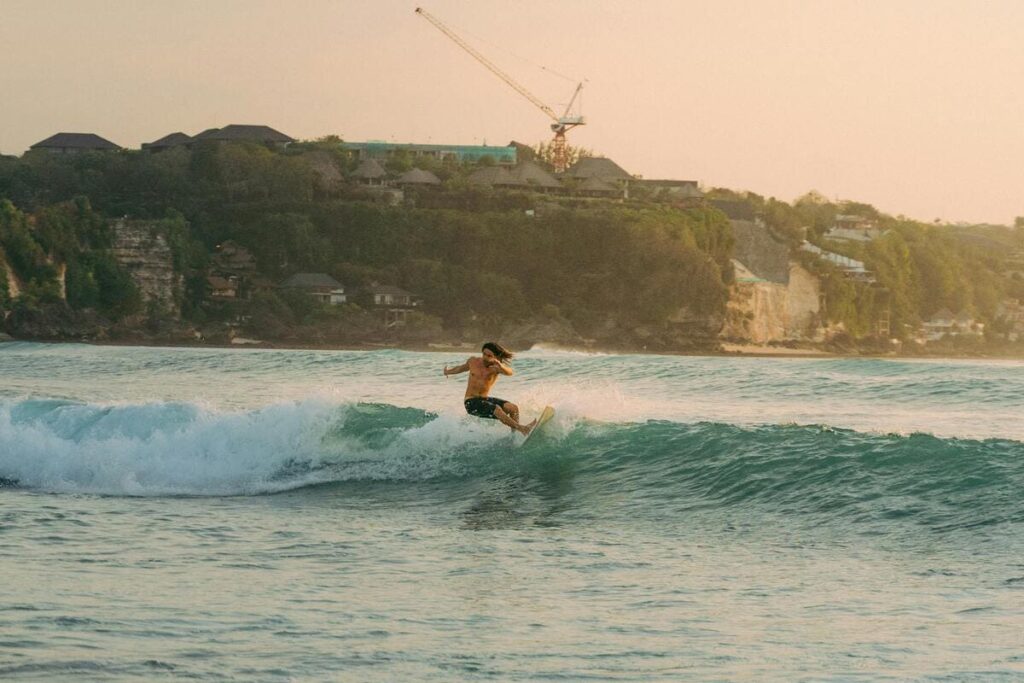
Located in the Pecatu village area, Balangan Beach is approximately 30-40 minutes from Ngurah Rai International Airport and a short 15-20 minute drive from the center of Uluwatu. Its geographical orientation makes it a prime “swell magnet,” meaning it picks up even the smallest waves when other beaches might be flat. For a beginner, this consistency is a huge advantage—it guarantees that you’ll likely have waves to practice on during your scheduled lesson.
The beach itself is approximately 500 meters long, flanked by high cliffs that provide a natural windbreak. This is particularly important for beginner surfing; strong winds can turn the ocean surface into a “choppy” mess, making balance much harder. Balangan’s cliffs help keep the water surface relatively “glassy” in the early mornings, which is the gold standard for learning. If you’re still weighing Balangan against other options, we recommend our ultimate comparison of Bali’s beginner beaches.
The Mechanics: Why Balangan Works for Your First Lesson
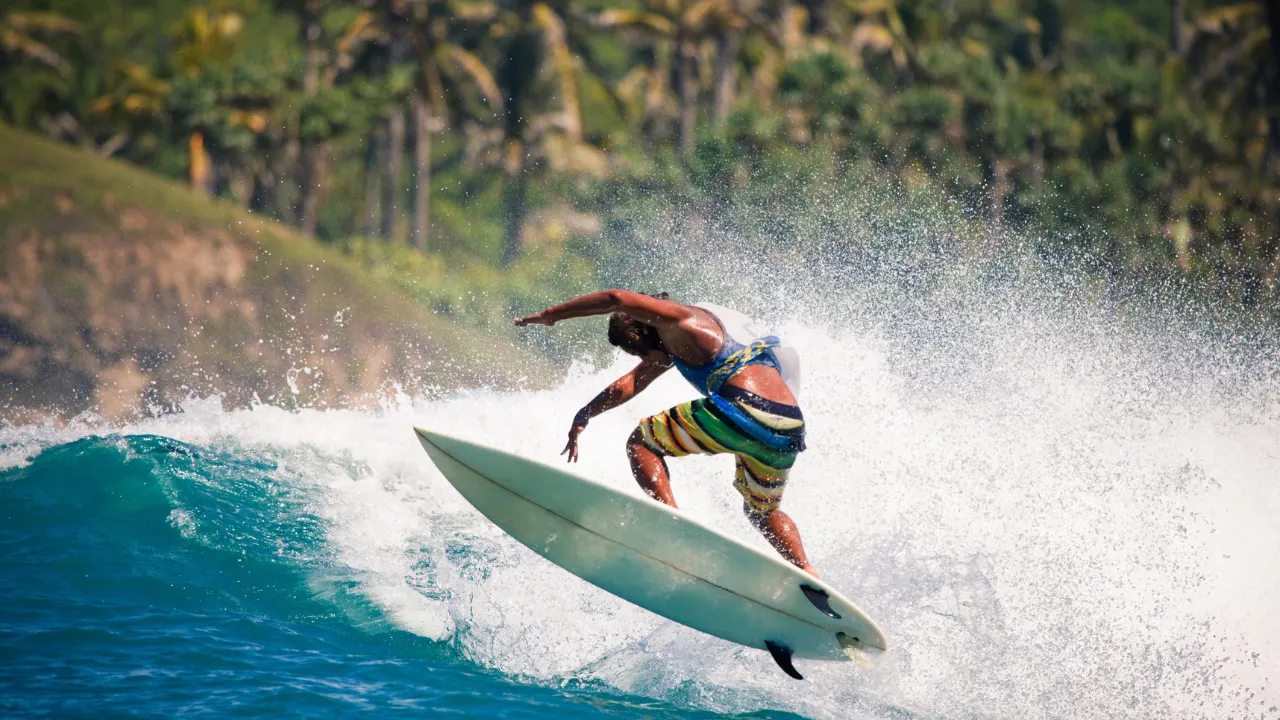
To the untrained eye, Balangan might look intimidating, especially when advanced surfers are riding fast waves further out. However, the beach is divided into several “zones.” Beginners typically operate in the **inside whitewater zone** or the **gentle mid-section reformers**.
Here is why these specific mechanics benefit you:
- Predictable Reformers: After a wave breaks further out, the energy often “reforms” into a smaller, gentler wave as it enters shallower water. These reformers are slower and have less vertical power, giving you more time to execute your pop-up.
- Soft Whitewater: For absolute first-timers, the wall of foam (whitewater) at Balangan provides a steady, stable push. Unlike the erratic whitewater of some sandy beach breaks, Balangan’s whitewater tends to move in a straight, organized line toward the shore.
- Channel for Paddling: Like many point breaks, Balangan has a natural “channel”—an area where the water is deeper and the waves don’t break. This makes the paddle out much less exhausting for beginners who haven’t yet mastered “duck diving” or “turtle rolling.”
- Deep Water at High Tide: At mid-to-high tide, there is a significant cushion of water over the reef. This provides a safety net for falls, which are an inevitable and important part of the learning process.

Timing Your Session: Swell, Tide, and Wind
Surfing is entirely dependent on the rhythm of the ocean. At Balangan, the window for a safe beginner lesson is narrower than at a beach break. This is why booking with a professional instructor who monitors the **tide charts** is non-negotiable.
The Ideal Tide Window
For beginners, the **mid-to-high tide** is the golden window. When the tide is too low, the water over the reef becomes shallow, which can be intimidating and increases the risk of minor scrapes if you fall incorrectly. As the tide pushes in, the waves lose some of their aggressive “lip” and become more like rolling mounds of water—perfect for learning to time your paddle. To understand more about how seasons affect these conditions, read our seasonal guide for Bali beginners.
Wind and Swell Size
Balangan handles a variety of swell sizes, but for a first lesson, you are looking for a swell between **2 to 4 feet**. Anything larger and the current (the movement of water along the beach) becomes too strong, making it difficult for a beginner to stay in position. The best wind is a light “offshore” wind (blowing from the land to the sea), which usually occurs in the early morning. This “grooms” the waves, making them smooth and easy to read.
What to Expect: Your First 2 Hours at Balangan
A professional beginner lesson at Balangan is a structured experience designed to build confidence. Because of the reef and the specific nature of the waves, the instruction here is often more detailed than a standard beach-break lesson. For a deeper look at the general process, see our step-by-step first lesson guide.
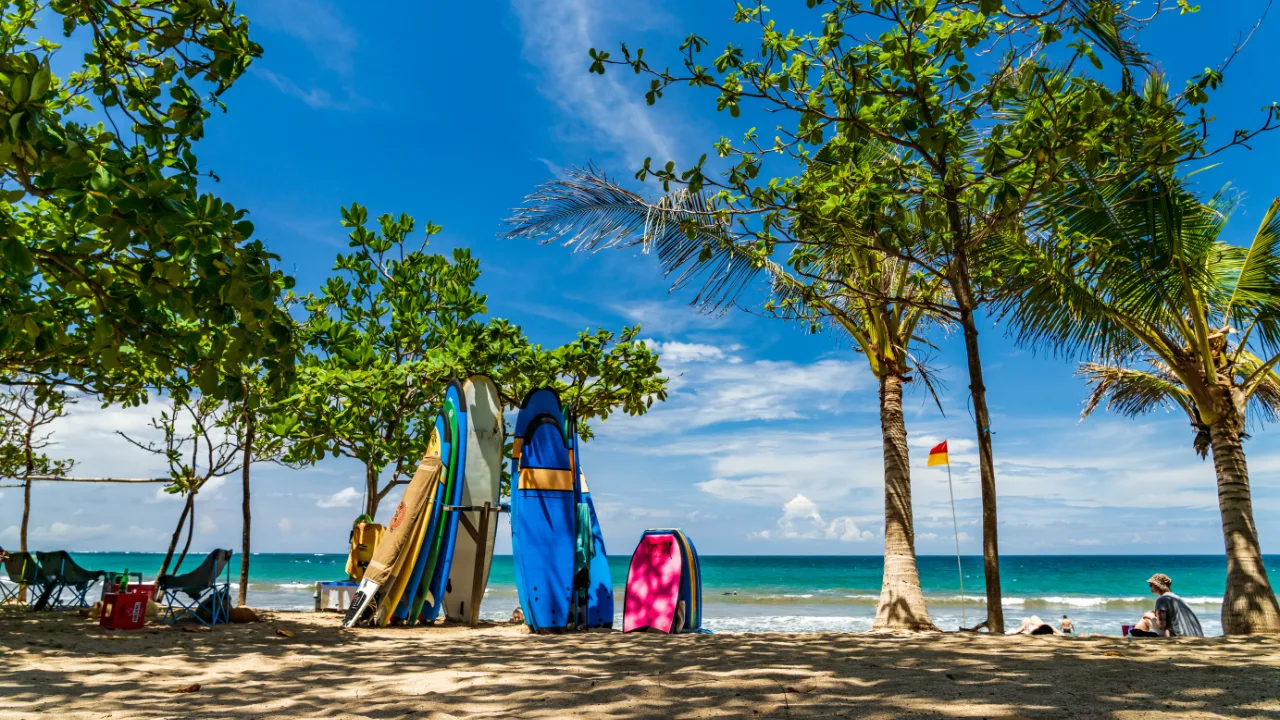
- Beach Briefing and Land Drills: You’ll start on the sand, far from the water’s edge. Your instructor will draw a surfboard in the sand to teach you positioning. You’ll practice the “pop-up” until the movement becomes reflexive.
- Specific Entry/Exit Paths: Balangan has specific paths through the reef that are easier to walk through. Your instructor will lead you through these to ensure you don’t step on anything sharp or lose your balance in the shorebreak.
- The “Push-In” Phase: In the beginning, your instructor will do the heavy lifting. They will hold your board, watch the waves behind you, and give you a push at the exact moment the wave’s energy reaches you. This allows you to focus 100% on your balance and stance.
- Progressive Independence: As the 2-hour session progresses, you’ll be encouraged to start paddling for waves yourself. The goal is to leave the session not just having stood up, but having understood the “timing” required to catch a wave independently.
Essential Safety and Local Etiquette
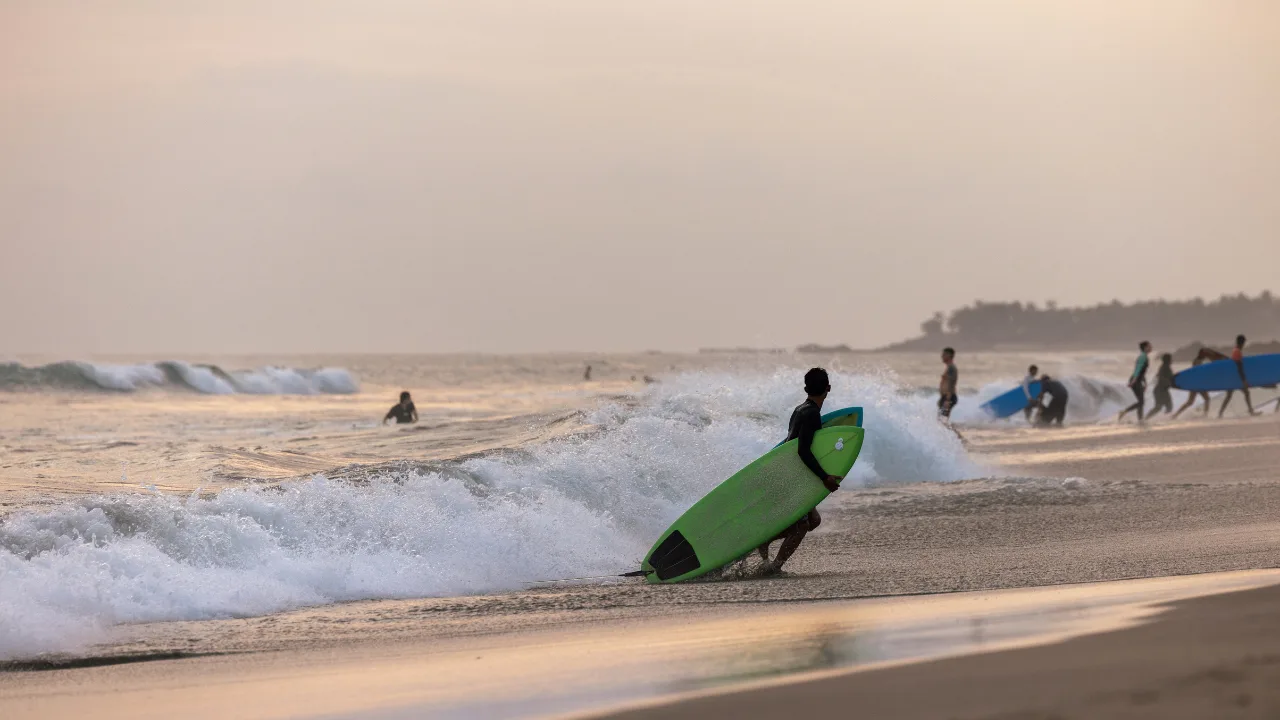
Surfing is a community sport with its own set of unwritten rules. At Balangan, where the lineup can include everyone from world-class professionals to day-one beginners, understanding etiquette is key to staying safe and respected in the water.
Important safety notes for Balangan beginners:
- Respect the Lineup: Never paddle directly into the path of a surfer who is already riding a wave. If a surfer is on a wave, they have the right of way.
- Hold Your Board: Never let go of your surfboard when a wave is coming. The leash is your lifeline, but a loose board in the whitewater can injure you or others.
- Protect Your Head: Whenever you fall, especially in shallower water, cover your head with your arms as you surface. This protects you from your own board or others.
- Avoid the “Peak” Initially: The very end of the beach (near the cliff) is the main “peak” where the most experienced surfers congregate. Stay in the mid-section or the “reforming” zones where there is more space and the atmosphere is more relaxed.

Logistics: Getting Ready for Your Balangan Session
Planning your visit to Balangan is straightforward, but a few local tips can make your day much more enjoyable. The beach is accessible via a paved road, and there is ample parking for both scooters and cars (expect a small parking fee of IDR 2,000 to 5,000).
What to bring to your Balangan lesson:
- High-Quality Sunscreen/Zinc: The sun at Balangan is intense, and you’ll be spending 2 hours with its reflection off the water. Zinc is highly recommended for the face.
- Towel and Change of Clothes: There are simple “warungs” (local cafes) on the beach that offer basic shower and changing facilities for a small fee.
- Drinking Water: While warungs sell cold drinks, bringing a reusable bottle is better for the environment and ensures you have water immediately after your session.
- Reef Shoes (Optional but Recommended): For absolute beginners, reef shoes (booties) can provide extra confidence when walking across the reef sections during entry and exit.
After your lesson, we highly recommend staying for lunch at one of the cliffside warungs. They offer affordable local dishes like Nasi Goreng and serve as the perfect viewpoint to watch more experienced surfers tackle the main peak.
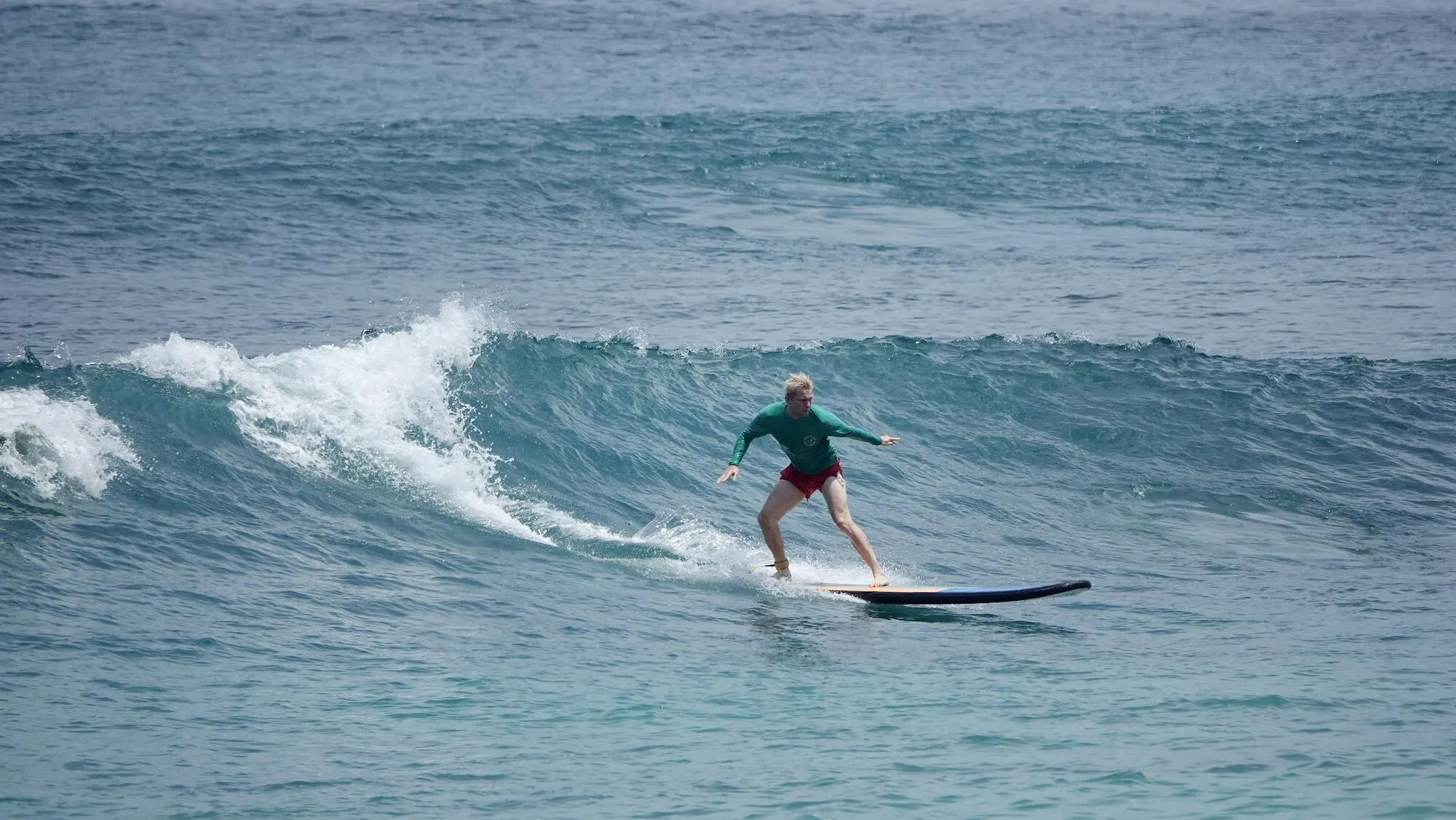
Book Your Beginner Surf Lesson at Balangan Beach
Are you ready to experience the magic of Balangan? Our professional, lifeguard-certified instructors specialize in introducing beginners to these world-class waters. We monitor the tides and swell daily to ensure you’re in the water at the optimal time for learning.
Skip the “beach sellers” and book directly with our Uluwatu-based team for a premium, structured experience at the best local rates.
WhatsApp for Instant Booking: Chat with Bali Surf Pro
View Our Lesson Packages: Surf Lessons & Pricing